
Newsletter
Beyond the Image: Radiology Risks
Oct 06, 2026

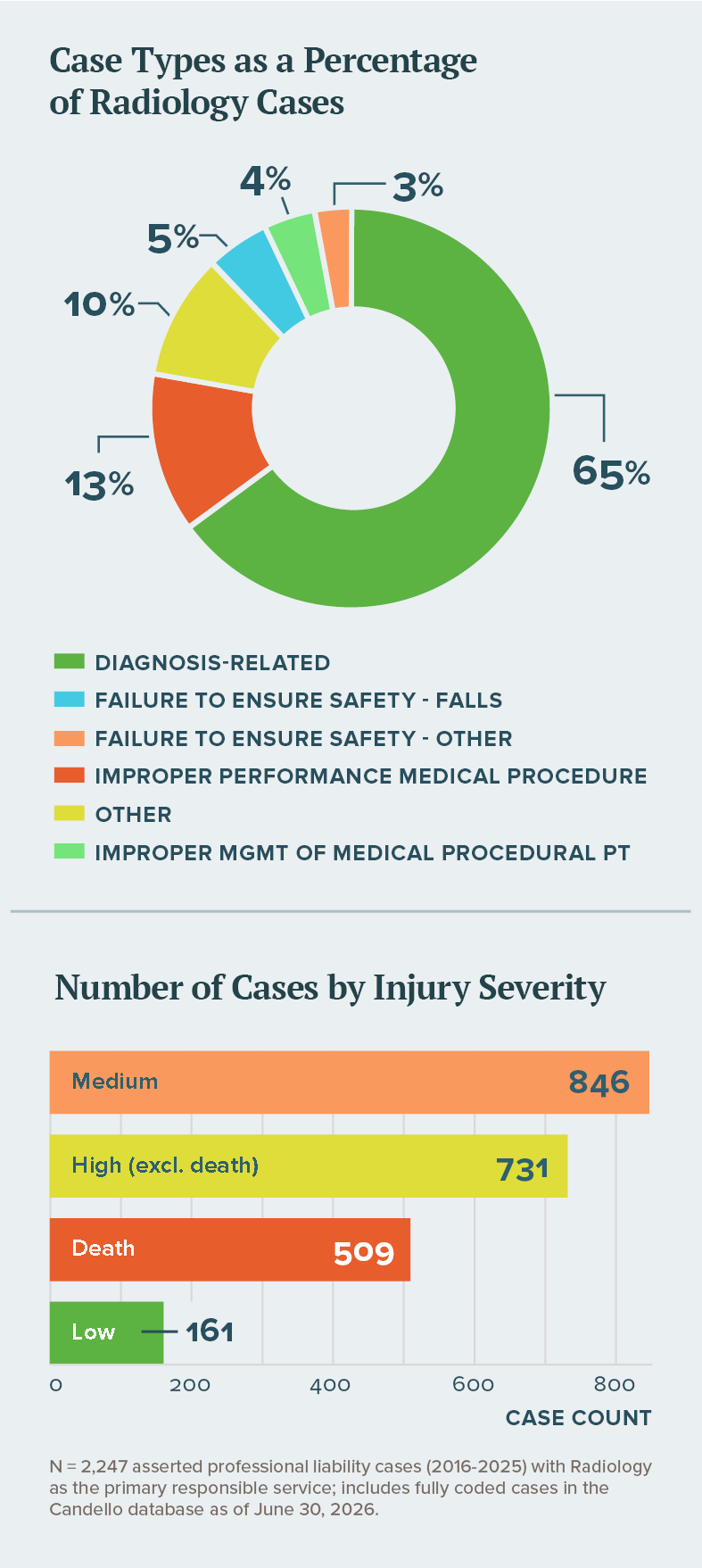
Radiology accounts for 5% of asserted cases in the Candello database closed from 2016–2025. Though a relatively small percentage, these cases reveal significant patient safety gaps. Understanding what goes wrong and where these events take place offers opportunities to reduce risk and provide safer patient care.
Why this matters?
Analyzing radiology cases can help determine where breakdowns occur and where stronger processes can be put in place. Diagnosis-related cases account for 65% of radiology cases, with cancer representing the most common final diagnosis. Patient assessment—including test interpretation, reconciliation of clinical findings, and ordering diagnostic testing—is the most frequently identified contributing factor, present in 71% of cases.
In radiology, patient assessment extends beyond the image. Clinical context is crucial. Knowing the location, nature, and time course of the patient’s symptoms, along with other information that may be relevant, such as smoking history, can help the radiologist focus on the most pertinent elements of the imaging.
What this means?
There should be well-defined channels for bidirectional communication between the ordering clinician and radiologist. Not only should the order for the radiology study contain the relevant clinical history, but the radiologists should have access to the electronic medical record so that they can obtain any additional information needed to accurately interpret the study. When the radiologist determines follow up imaging is needed, the recommendations to the ordering clinician should be clear, including specifying the follow up imaging modality and time course.
With 56% of all cases occurring in the ambulatory setting, the data point to the outpatient environment as an important area for risk-reduction efforts. Especially among studies in the ambulatory setting, the delay between the study being ordered and being performed may be substantial, making these communication channels all the more important.
Recent Issues
Surgical Malpractice: Fewer Cases, Higher Stakes
Obstetrics Claims: Higher Severity, Higher Stakes
General Medicine: Diagnostic Risk Across the Continuum of Care
